

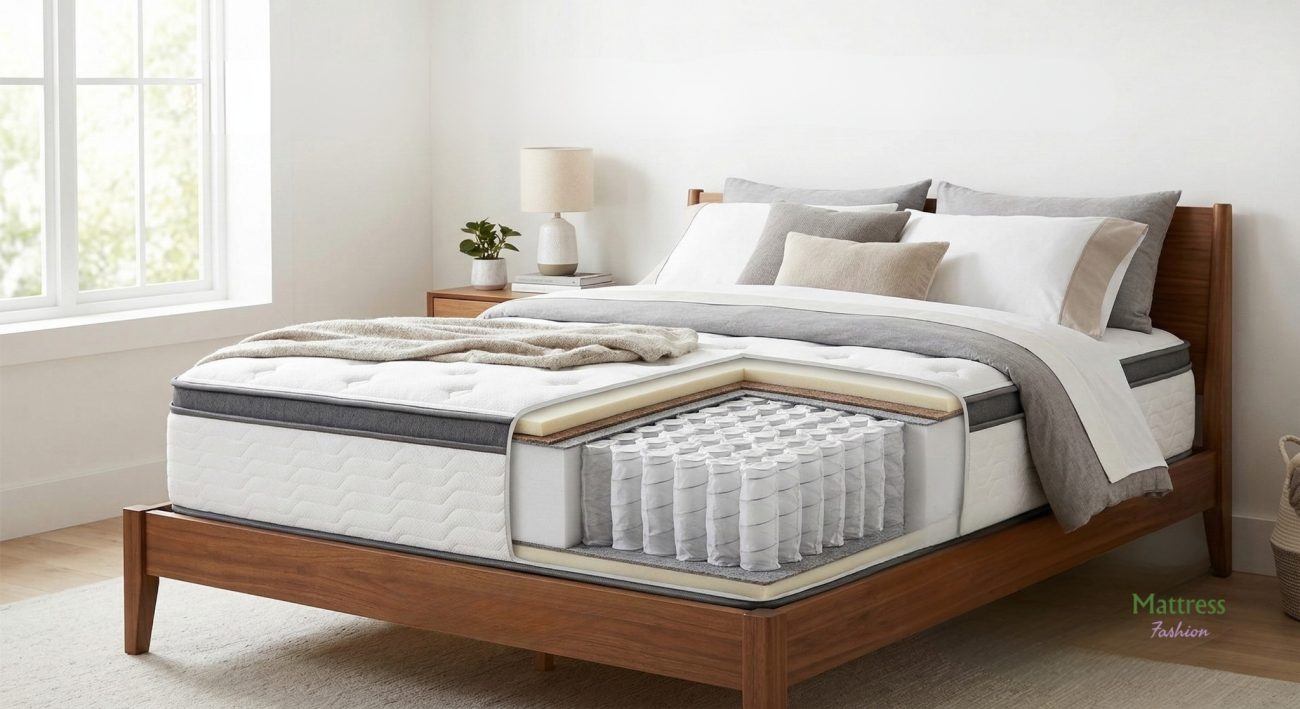
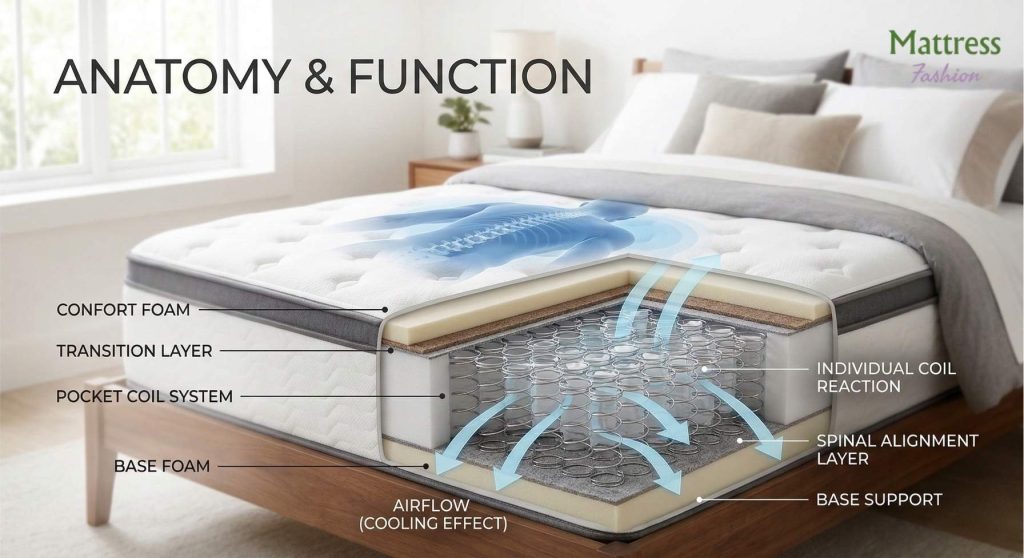
A coil mattress is a type of mattress featuring an organized system of metal coils designed to support the spine. These coils are typically made of tempered steel, providing support by flexing in response to body weight. As weight is applied and pressure increases, the coils become firmer, ensuring the spine maintains its natural alignment. Because air can freely circulate between the coils, these mattresses sleep significantly cooler compared to foam options. Additionally, the tempering process allows the coils to retain their original shape for a long time. In summary, coil mattresses deliver excellent spinal support by evenly distributing body weight, offering a flexible and highly durable sleep surface.
Coil Mattress Systems: Different Types of Coils
The primary types of coils used in innerspring mattresses include the following:
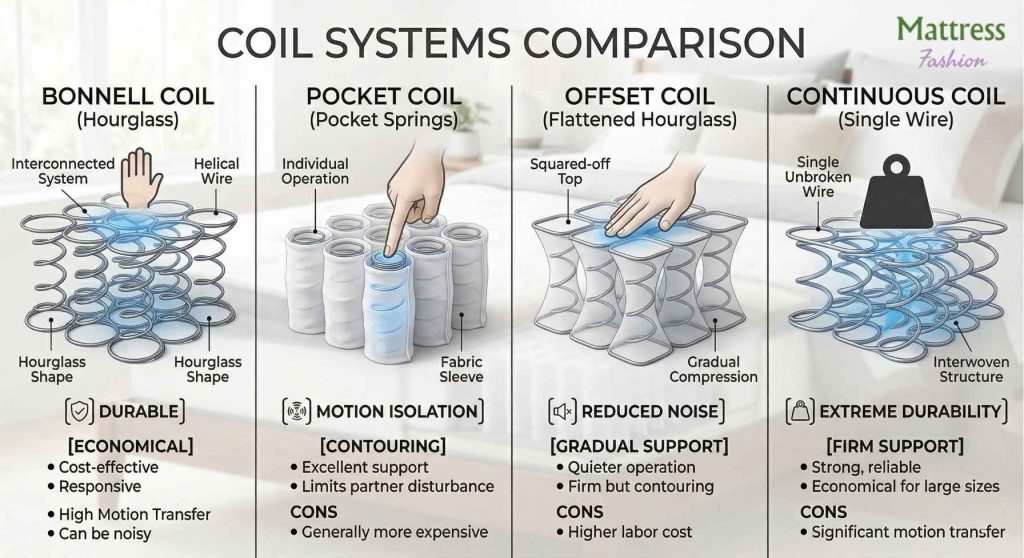
- Bonnell Coils: These are hourglass-shaped coils, wider at the top and bottom while narrower in the middle. All the coils are connected to each other at their ends by helical wires; therefore, when weight is applied to one area, the entire system moves together. While their advantages include low cost, durability, and a quick response time, their drawbacks are that they can be noisy, allow for high motion transfer, and have a tendency to sag in the middle over time. For instance, experts note that sitting on the edge of this type of mattress often causes the entire surface to compress simultaneously.
- Pocketed Coils (Pocket Springs): Each individual coil is wrapped in its own separate fabric sleeve (or pocket). This allows the coils to operate independently, meaning only the specific area where pressure is applied will compress. This design significantly enhances motion isolation and conforms much better to the body’s contours; the movement of one person in bed barely affects the other side. The main disadvantage is that they are generally more expensive due to their complex manufacturing process.
- Offset Coils: This is an upgraded version of the Bonnell coil. They share a similar hourglass shape, but their top and bottom edges are squared off (flattened). Thanks to this design, the coil compresses more gradually under pressure, resulting in less noise and reduced motion transfer compared to standard Bonnell coils. Because they are more labor-intensive to produce, they slightly increase the overall cost of the mattress.
- Continuous Wire Coils: These are formed by twisting a single, continuous piece of wire into rows of coils. They are highly durable and economical; however, since all the coils are connected along a single wire, motion transfer is common, and they offer less body contouring compared to other types. They are typically paired with thick comfort layers to offset this firmness.
- Mini/Micro Coils: These are very small coils, typically 2 to 5 cm in height, placed within the comfort layers of the mattress. These mini coils provide extra flexibility and quick responsiveness, enhancing overall comfort while creating an additional layer for airflow.
Pros and Cons of a Coil Mattress

The Advantages (Pros):
- Strong Support: Coils evenly distribute body weight to promote proper spinal alignment. This makes them ideal for individuals with back issues who require firm, reliable support.
- Cooler Sleep: The open spaces between the coils significantly enhance airflow, allowing the mattress to sleep much cooler than traditional foam options. This is a major advantage for hot sleepers.
- Motion Isolation: Particularly in pocketed coil models, the independent action of the springs means movement on one side of the bed barely transfers to the other. This ensures partners are less likely to disturb each other when tossing and turning.
- Durability: Tempered steel coils are exceptionally long-lasting and retain their structural integrity despite years of use. They are specifically engineered to withstand tension and consistently bounce back to their original shape.
The Disadvantages (Cons):
- Motion Transfer: In traditional coil systems (like Bonnell or continuous wire), the movement of one person on the bed significantly affects the other side. Especially with looser coil structures, there can be a noticeable bouncy or rolling sensation.
- Noise Potential: Over time, metal coils can produce squeaking or friction noises. This creaking is particularly prominent in older or lower-quality innerspring mattresses.
- Sagging: Traditional Bonnell coils have a tendency to sag in the middle over the long term. (Pocketed coils perform much better in preventing this issue.)
- Cost: High-performance pocketed coil systems are generally more expensive compared to other traditional coil options.








1 Comment